How to Water a Garden: A Guide to Healthy, Productive Plants
Watering sounds like one of the simplest parts of gardening, but it's also one of the easiest things to get wrong.
When you have the best intentions for your kitchen garden and want to see your plants succeed, it can be hard to hold back from micromanaging, especially early in the season when you want to nurture your plants. However, a lot of times micromanaging your plants leads to over or under-watering. Add to those rainy days in a row or a week of high-temp summer days with a blazing sun, and you might actually be doing more harm than good.
The truth is, there isn't one watering schedule that works for every garden or every week of the growing season.
Your plants, soil, weather, and even the amount of sunlight your garden receives will change throughout the season. The best thing you can do is pay attention. Walk through your garden regularly, look at your plants, feel the soil, and make adjustments as conditions change.
Your garden will teach you how to water it.
How Often Should You Water a Vegetable Garden?
Established vegetable plants generally do better with deep, consistent watering rather than frequent, shallow watering.
Frequent shallow watering can keep roots closer to the surface and make plants more susceptible to stress. Deep watering encourages roots to grow farther into the soil, where they have better access to moisture when conditions get hot and dry. A rain wand [AMAZON: Rain Wand] makes it easier to direct water right at the base of your plants, especially once the garden gets full and reaching between plants becomes more difficult.
But "consistent" doesn't mean watering for the exact same amount of time every day.
Rainfall, temperature, wind, soil type, plant maturity, and sunlight all affect how quickly your garden dries out. That's why checking the soil is so important. A simple rain gauge [AMAZON: Rain Gauge] can also help you keep track of how much water your garden has actually received that week.
And while a rain gauge can help, my go-to method for testing moisture is the finger test. I’m known for teaching this to all my clients, and I’ll teach it to you, too.
Push your finger into the soil near your plants, ideally a couple of inches down, at least to your second knuckle. If the soil still feels cool and moist, you probably don't need to add more water yet. If it feels dry and warm, it may be time to water. While moisture meters can be a great tool, nothing can replace using our own senses to see the signs and feel the moisture content of the dirt.
And don't forget to actually look at your plants. They can tell you about the moisture levels, too.
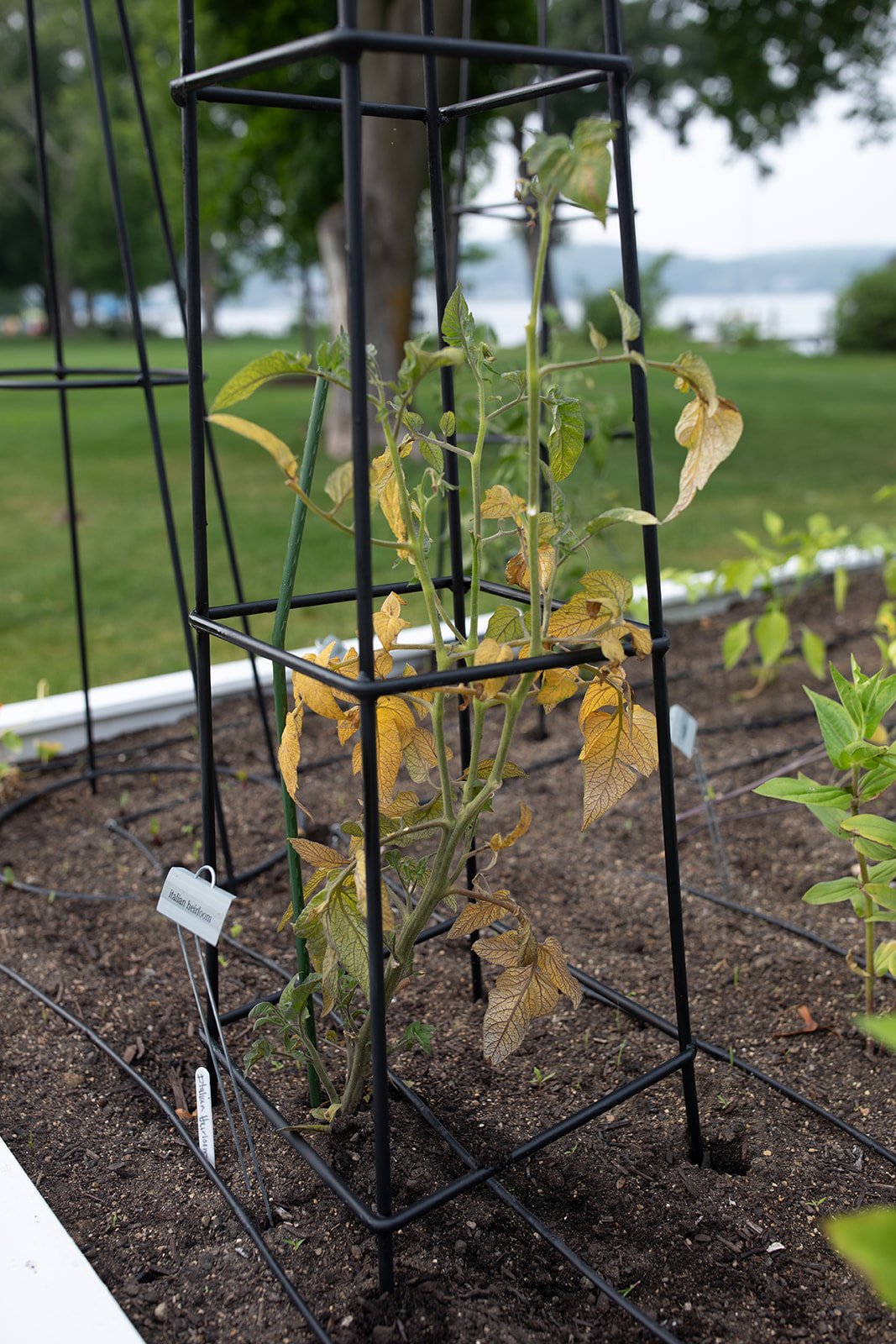
Signs Your Garden May Be Overwatered
Too much water can be just as stressful for plants as too little water.
Some signs of overwatering to watch out for:
Yellow or browning leaves
Dark spots on the stem
Wilting or limp leaves, especially if the soil is moist
Soil that remains consistently soggy
If you think you are overwatering, you should definitely check the soil before turning on the hose or irrigation. Give your garden time to dry out, then focus on watering deeply and less frequently moving forward.
Signs Your Garden May Need More Water
Plants that aren’t getting enough water may show signs like:
Yellowing or dry leaves
Wilting leaves, especially in newer growth
Flowers or fruit not forming properly or dropping
Dry soil several inches below the surface
One important note: plants can temporarily wilt during the hottest part of a summer afternoon even when there is adequate moisture in the soil. Before immediately turning on the hose, check the soil. If it's still moist, give the plant a chance to recover as the temperature drops. When possible, avoid watering during the hottest, sunniest part of the day, when more water can be lost to evaporation.

Why Consistent Watering Matters for Tomatoes
Tomatoes in particular prefer routine; any interruption to consistent watering causes the plant to stress.
If you've ever picked a tomato and found a dark, sunken spot on the bottom, you've likely encountered blossom-end rot. While it appears as a calcium deficiency in the developing fruit, inconsistent soil moisture is often what prevents the plant from taking up and moving the calcium it needs.
That's one reason I don't recommend waiting until tomato plants are visibly struggling before watering them. Maintaining relatively even soil moisture throughout fruit development helps reduce plant stress and can prevent issues like blossom-end rot and fruit cracking.
Adding calcium isn't automatically the answer. Start by looking at your watering habits and soil moisture first.
The Best Time of Day to Water Your Garden
Early morning is my favorite time to water established plants.
It gives plants a chance to hydrate before the heat of the day and allows any wet foliage to dry relatively quickly. Whenever possible, water the soil around the base of the plant rather than spraying the leaves.
But gardening also has to work with real life. If you can't water at the "perfect" time one day, don't panic. Paying attention to what your plants actually need is more important than following a perfect schedule.
Weather matters, too. After a heavy rain, don't automatically run your irrigation system because it's Tuesday. Check the soil first. During an unusually hot, dry, or windy stretch, your garden may need more frequent attention.
How to Water Seeds and Seedlings
Seeds and newly germinated seedlings need different treatment than established plants because their roots are still close to the soil surface.
After sowing seeds, try a light sprinkling of water twice a day until those seedlings come up, doing your best to keep a consistently moist soil.
It’s better to lightly sprinkle twice a day than soak the seeds. We do not want soggy, saturated soil.
As the plants become established, transition away from frequent light watering and toward deeper watering that encourages roots to grow down into the soil.
For everyday watering, an adjustable hose nozzle [AMAZON: Hose Nozzle] makes it easy to change the water pressure depending on the maturity of the plant you're watering.
Using Irrigation in a Kitchen Garden
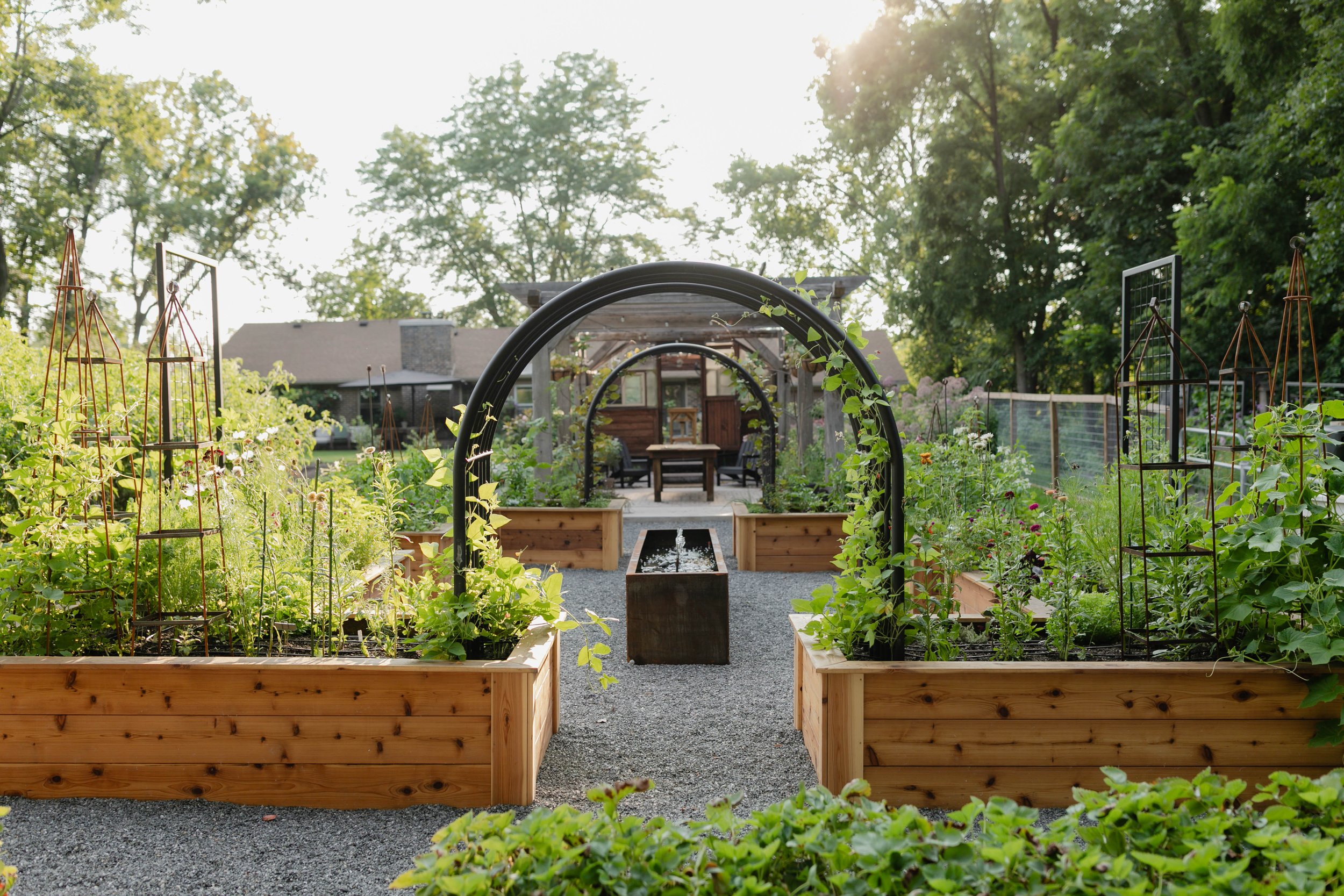
A properly designed irrigation system can make caring for a kitchen garden much easier, especially during the busiest and hottest parts of the growing season.
Drip irrigation delivers water directly to the soil around your plants, helping maintain more consistent moisture while keeping water off the foliage. It also takes one more daily task off your plate.
But irrigation isn't "set it and forget it."
An irrigation system is a tool, not a replacement for paying attention to your garden.
You still need to walk through the garden, check your plants, feel the soil, and make sure the system is operating properly. Look for clogged or damaged emitters, leaks, areas receiving too much water, and plants that aren't receiving enough.
And your irrigation schedule shouldn't stay exactly the same from May through October.
Adjusting Your Irrigation System For Fall
This becomes especially important as we head toward fall.
The temperatures begin to cool, days get shorter, the position of the sun changes, and your garden may receive fewer hours of direct sunlight than it did at the height of summer. All of that changes how quickly moisture evaporates from the soil and how much water your plants need.
A system that worked perfectly during a stretch of 90-degree July days may be giving your garden far too much water by September.
As the season changes:
Check the soil regularly instead of relying only on your irrigation timer.
Adjust watering frequency or duration as temperatures cool.
Account for rainfall before running the system.
Check that emitters and irrigation lines are still working properly.
Pay attention to areas of the garden that may receive less direct sunlight as the sun shifts.
Learn to Let Your Garden Tell You What It Needs
Learning how to water your garden isn't about memorizing a perfect formula.
Every garden has its own soil, sunlight, drainage, microclimate, and weather patterns. Those conditions will change throughout the season and from year to year.
Get into the habit of walking through your garden. Feel the soil. Look closely at the leaves. Notice how quickly different areas dry out. Check your irrigation rather than assuming it's doing its job.
The more you pay attention, the easier it becomes to recognize what your garden needs. That is a skill you’ll use every single growing season.
If you're struggling to figure out what's happening in your garden, you can book a one-on-one garden coaching session. We'll look at your garden, your growing conditions, and your specific challenges so you can feel more confident caring for it.
» BOOK A ONE-ON-ONE GARDEN COACHING SESSION
You Might Also Like…